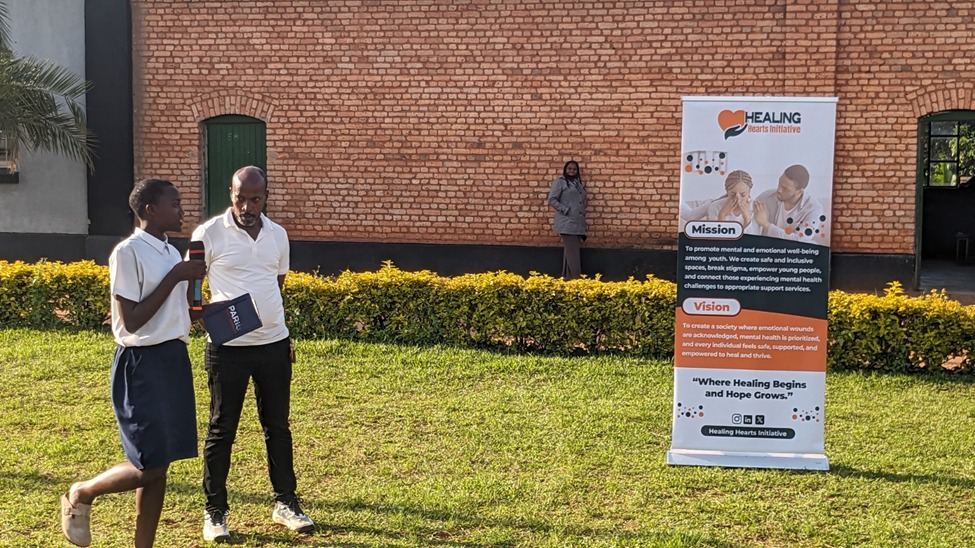
On 6 May 2026, Healing Hearts Initiative(HHI) visited G.S. Butare Catholique for a mental health awareness session with primary and secondary school students.
The session focused on understanding mental health, recognizing common mental health challenges, knowing where to seek help, and the importance of seeking support early.
The session was highly interactive, with students asking questions and sharing personal experiences. One student asked whether being happy, social, generous, and hardworking could be signs of bipolar disorder.
This opened an important conversation about the difference between normal emotions and symptoms that may require professional support. Students learned that people should not diagnose themselves or others based on individual behaviors.
A student's experience with mental health stigma highlighted the importance of helping families understand mental health and seek appropriate professional support.
Another student shared concerns about her father's mental health condition, which her family believed was caused by demons. Her story highlighted the impact of stigma and the importance of helping families understand mental health and seek appropriate professional support.
After the session, more than 50 students approached Healing Hearts Initiative(HHI) to ask questions and share their concerns.
Students Reached for Further Conversation
More than 50 students approached the team after the session with questions and concerns.
In response, we agreed with the school to establish an Ibanga Room, creating a safe and confidential space for students to seek support.
The planned Ibanga Room will provide students with a safe and confidential space to seek support.
Following the visit, 17 children were referred and connected to support services at nearby hospitals.
Children Connected to Support
Following the visit, 17 children were referred and connected to support services at nearby hospitals.
This experience reminded us that awareness must be followed by action: creating safe spaces, breaking stigma, and connecting young people to the support they need.
Creating safe spaces. Breaking stigma. Empowering young people to heal and thrive.